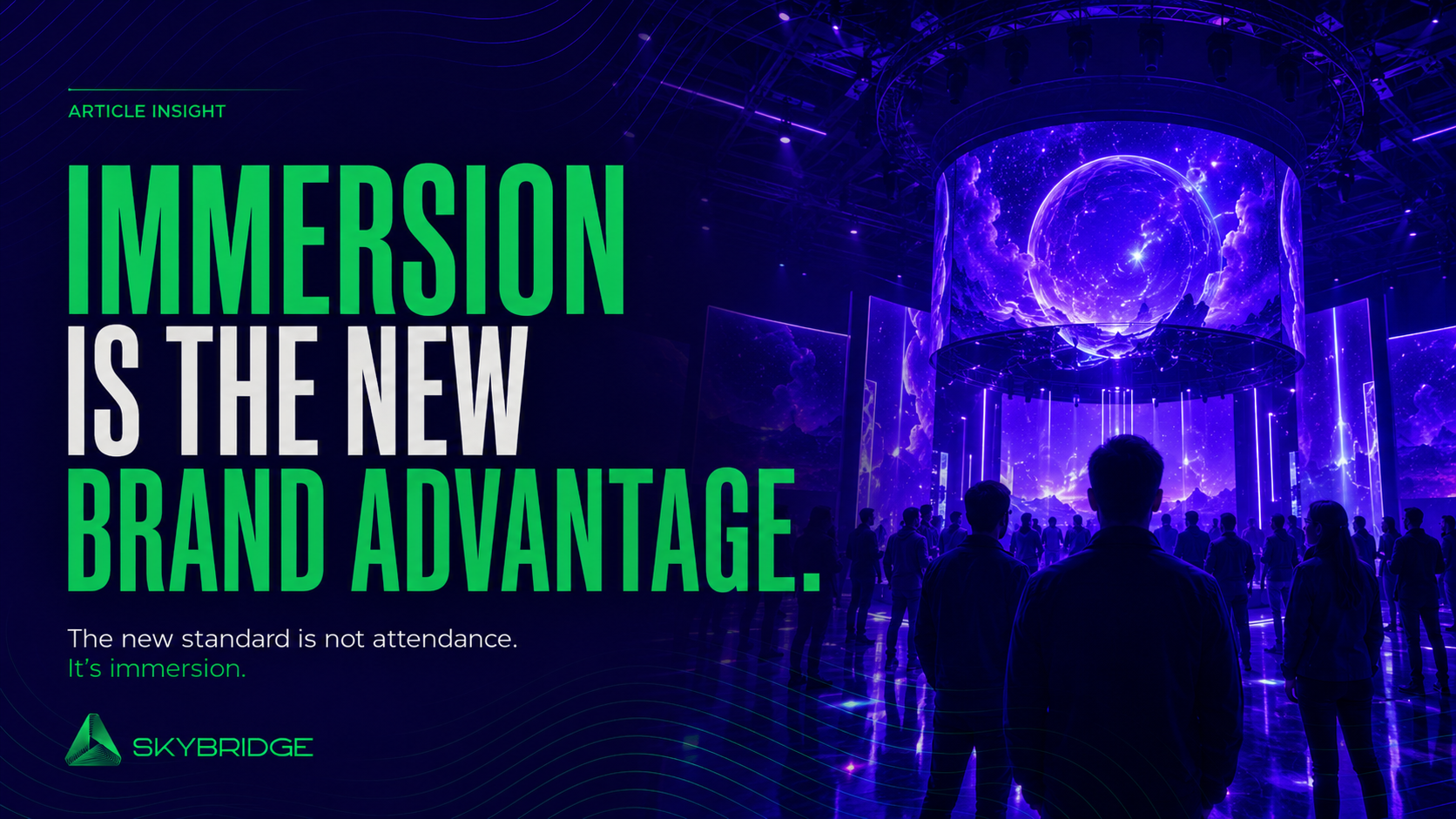
For years, event success was measured by attendance.
How many people showed up?
How many seats were filled?
How many guests passed through the venue?
But today, attendance is only the beginning.
Audiences have seen the stages. They have watched the presentations. They have stood beside the branded walls. A standard event setup no longer creates the kind of impact brands need.
The new standard is not attendance.
It is immersion.
Audiences Expect More Than Something to Look At
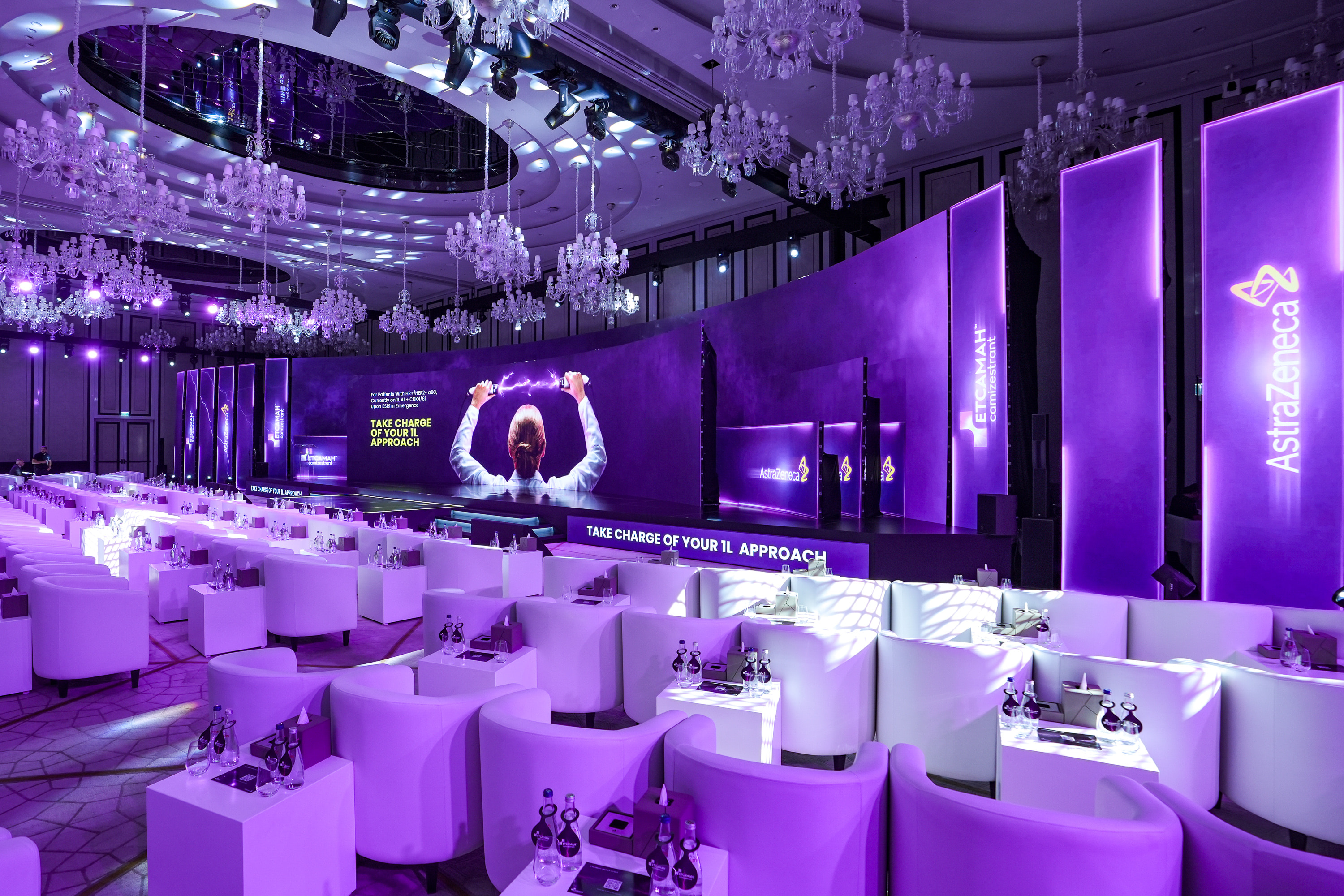
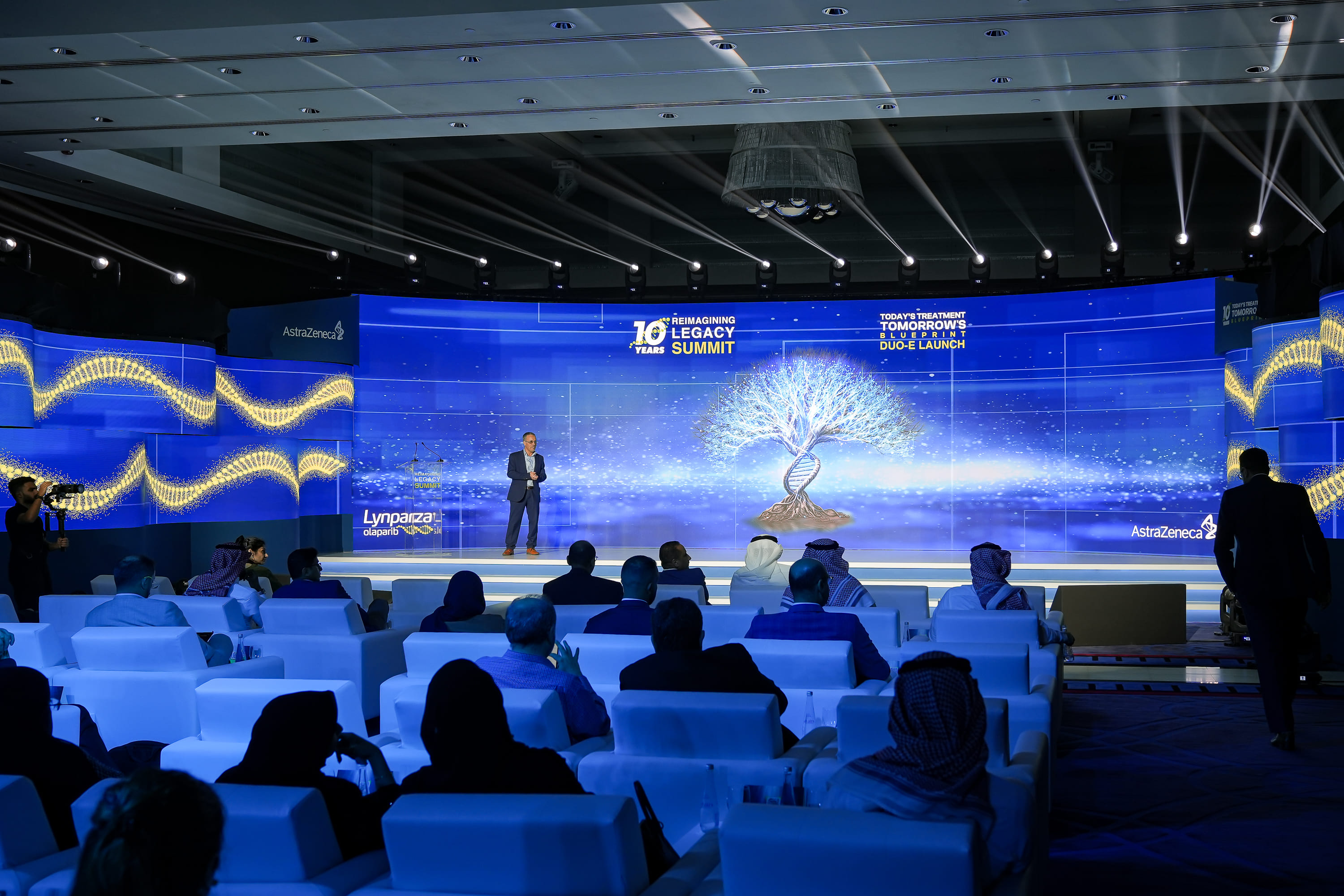
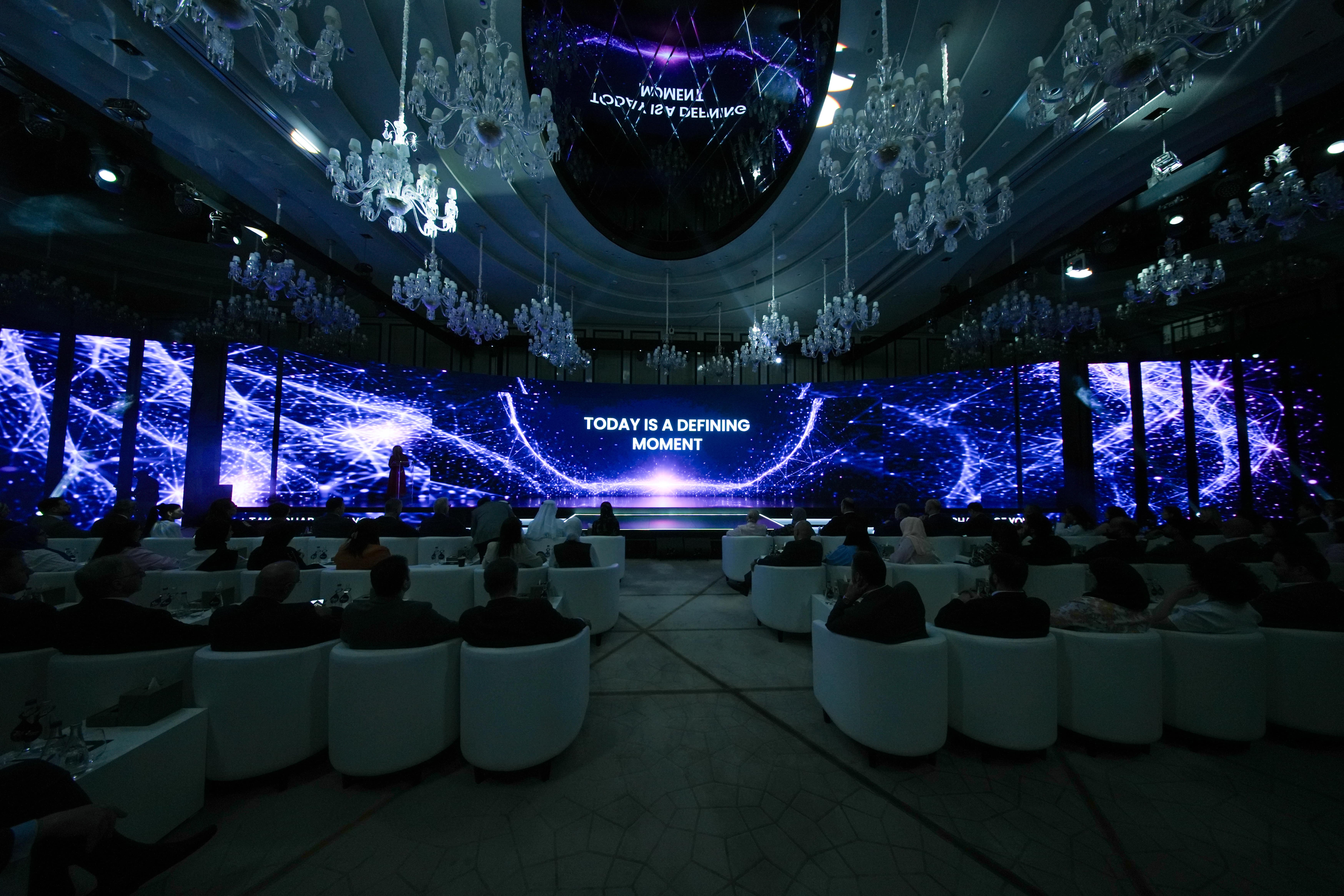
People no longer want to sit in a room and simply receive information. They expect to enter a world built around the brand.
That world can be created through spatial design, lighting, sound, content, technology, guest movement, interaction, and atmosphere. But immersion is not about adding more elements for the sake of spectacle.
It is about making every element work together.
The audience should not feel like they are watching the brand from the outside. They should feel like they have stepped into it.
That is what separates a standard event from an immersive brand experience.
Immersion Turns Presence Into Memory
An event can gather people in one room.
An immersive event gives them something to remember after they leave.
That difference matters.
Audiences are exposed to more content than ever. They scroll quickly, compare instantly, and forget easily. For brands, attention is no longer enough. The real challenge is creating moments that stay with people.
Immersive events help brands do that by turning messages into environments.
A product story becomes a journey.
A brand value becomes a physical space.
A reveal becomes a moment people can feel, capture, and talk about.
The stronger the immersion, the stronger the memory.
It Takes More Than Production
One of the biggest misconceptions about immersive events is that they are only about production value.
Bigger screens.
More lights.
More technology.
But true immersion is not built by adding more. It is built by connecting better.
A powerful immersive experience requires spatial design, content, technology, lighting, sound, and guest journey to work as one system. Each layer has a role. Each touchpoint needs a reason.
The space should guide the audience.
The content should shape the story.
The technology should support interaction.
The lighting should control emotion.
The sound should build atmosphere.
The guest journey should bring everything together.
When these elements are planned separately, the event may look impressive, but it can still feel disconnected.
When they work together, the brand becomes an experience.
Immersion Is a Strategic Investment
Immersive events are not just a design trend. They are becoming a brand advantage.
The brands investing in immersion are not simply hosting events. They are building environments audiences want to explore, engage with, photograph, share, and remember.
That requires investment. Not just in production, but in thinking, planning, and experience design.
Because the goal is no longer to bring people into a room.
The goal is to make that room matter.
Building Worlds Audiences Remember
The future of events is not passive.
Audiences want environments that respond. Stories they can step inside. Moments designed around their presence.
For brands, this changes the role of events entirely.
An event is no longer just a platform for communication. It is a chance to create a world around the message.
And the brands that understand this are the ones setting the new standard.
Because the strongest events are not simply attended.
They are experienced.